Finalist in Tartts First Fiction Award 2023. Printed in “Tartts Nine, Incisive Fiction from Emerging Writers Anthology,” August 2023.
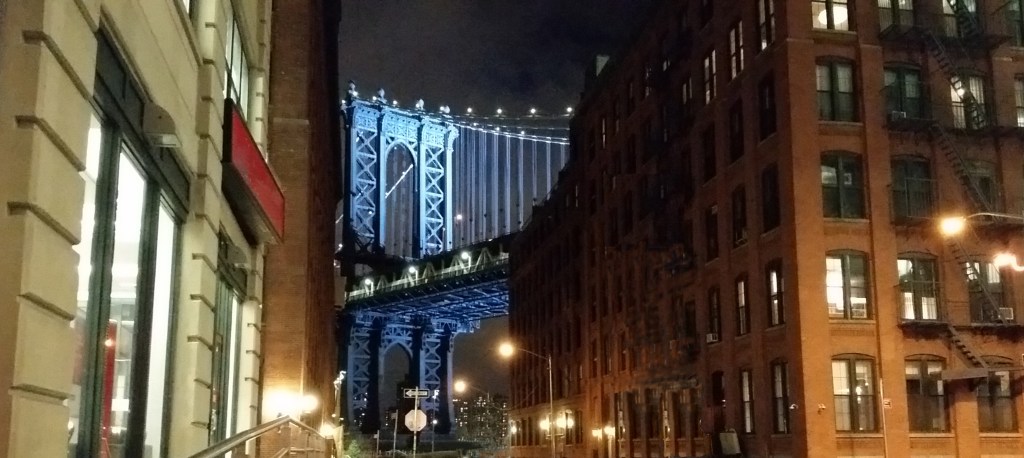
The two kids – excuse me – young adults, who’d peeked into the half-open door of my loft appeared to be barely out of their teens, oozing with energy, confidence, and optimism.
“You’re, Max, right?” the girl asked.
“So, who might you be?” I did my best to sound like a pirate, the Long John Silver of DUMBO, though I had both legs and no immediate plans for a parrot. Word in the building was I had great carpentry skills when I cared to use them which is why, most likely, these two visitors had dropped by.
“I’m Ben. This is Celeste,” said the scrawny guy.
Though in my early forties I knew I looked older and felt older than most of the tenants in the building. Frankly, I was a little beaten up by life, visibly overweight with eyelids hovering halfway up or down like I might be tired, bored, or drunk, but I was just lazy.
“We leased the second-floor loft in the back on the concrete side of the building and moved in a couple of weeks ago.”
I gave them one of those over the eyeglasses stare downs like my dad used to give me when I interrupted him reading his paper. I saw right away they were confused with why I might be annoyed with them. After all, we’d never actually met. I purposely didn’t appear friendly, showing no smile or twitch of my mustache above my black full beard. I was inscrutable.
(Click on number 2 to continue reading the story.)
As published in THE HONG KONG REVIEW, Volume III, No. 3, Fall 2022
I was struck speechless that afternoon in 1932 when I first saw Mr. Herbert’s Stromboli’s Nights of Wonder Carnival in a trampled corn field in Toledo, Ohio.
Even a dumb twelve-year old like me could see it was all fake, a jerry-rigged assortment of broken-down kiddy rides and game booths with worthless prizes. But at night, when the twinkling fairy lights were lit, the canned music blared, and popcorn and cotton-candy machines spewed enchanting aromas, I was bewitched, and I lived there that summer.
“Who’s Stromboli?” I asked Mr. Herbert, a childhood friend of my father.
“Some guy I met in a bar. Sounds classy, right, Bernard?” he said.
Published by Sledgehammer Literary Journal, February 8, 2022. Link is currently not available.
Muffled steps approached as we walked with our pizza and wine down the hill toward the shadowy patch under the highway.
“Check this out, guys,” a husky voice stage-whispered behind us.
Ben and I turned to face three teenagers – basketball shorts, arms and legs like sticks, a gun. The kid holding the gun was fidgety, his knuckles scabbed. His eyes were a pale grey. No one was smiling.
They spread out.
Heart pounding and palms sweating, I embraced our pizza like a shield. It was a rare extravagance. Usually we just bought a couple of slices, but it was our two-year anniversary of living, working, and making art together in our loft in Fort Greene.
The gun looked fragile, like a toy. I prayed it was.
They probably thought we had more money than they did. Why not even things out a little? Three against two. I thought to offer them the five dollars we had left after buying dinner, but up against a gun, it didn’t seem close to enough.
“Empty your pockets,” another one said. His voice cracked and his friend punched his shoulder like a big brother would.
Ben cradled our cheap bottle of wine.
I searched the deserted street for rescue. Usually someone was out walking a dog or rushing home with groceries.
No one.
“You don’t to want to do this,” Ben said as he took one step toward them. I watched him reach behind his back and grab the bowie knife he tucked in his waistband against emergencies. I wanted to scream, but I couldn’t remember how.
Ben had come to New York to become an artist from west Texas where everything bit, scratched or stung. He was always ready for anything. I’d come from Ohio to see if I had any talent, hoping to stay.
It was a Brooklyn stare-down.
The hum of traffic on the overpass was like a white noise machine. The perfect soundtrack for a takedown, until a tractor-trailer’s airhorn blasted over our heads before rumbling on to Queens.
Everyone flinched.
The gun boy’s eyes flickered upward. An almost imperceptible spasm began in his bicep and slowly traveled down his arm to the hand gripping the gun. He squeezed his fingers and the barrel exploded. The crackle ricocheted from the roadway pilings.
Searching Ben’s eyes for pain or a dark stain on his chest to spread, I opened my arms to catch him.
The bullet had passed between us vanishing into the ether, finding neither soft tissue nor hard bone.
As if snatched by an invisible tornado, the boys took flight like moths into the spring night. Their footsteps hushed by our pounding pulses.
We stumbled home clutching each other, conjoined by our reprieve.
Huddled together, we gagged on the pizza. Ben’s hand trembled when he poured us glasses of wine, dripping it everywhere. A small red blotch struck the rug spreading to the edge. We dumped the rest down the sink. It cost us too much to drink it.
Published by Gone Lawn, Issue 43, January 31, 2022.
Click on link to read story or read story below.
Knock Me Over
Since four o’clock, Paul had fantasized about going home and making mac and cheese, not out of the box, the real kind with three cheeses, elbow macaroni, and a touch of spicy mustard. He could smell it — gooey and warm. Seeing Lisa’s face when she took her first bite made him want to cook for her every day.
“Help me up. Where are my groceries?”
It had been a sucky day at work. His boss was out of town and the team had a mega-crisis. The client had a half mil to use on overnight ad placement. No one wanted to make a decision. He knew what to do, but he was the new guy. He hadn’t gone all, ‘I’m the smartest one here’ and stepped on a few toes. He should’ve.
“Stay still. Talk to me.”
The slog to the subway was miserable. New York in early March was rainy, windy, a touch of sleet thrown in for the hell of it. The platform was packed; nobody favored walking in the icy soup. A train arrived. He pushed his way on harder than he usually would’ve, but he needed to battle the ghosts of the day to even things out. He found himself wedged in, nose to armpit with a guy who’d been to the gym and elected to skip the recommended post workout shower.
“I’m really cold.”
At the Roosevelt Island stop, he pushed onto the platform, and took his first clear breath since West Fourth. The walk to Foodtown was surprisingly enjoyable, proving what his mom always said about not letting the tiny things get too big and take over your day. He ducked into the store and steamed through aisles. The line was long, but he was drying out and warm. His backpack was lighter than usual as he’d left his work laptop in the office for spite. No late-night emails would bother him tonight.
“The ambulance is coming, kid. Are you in pain?”
The wind was always strong on the Island. Something he loved in the summer; dreaded in winter. It was spitting sleet mixed with snow when he hit the automatic exit doors clutching his plastic bag of contentment. Through the dripping trees, he could see lights glowing in his 9th floor apartment across the park. Lisa was home.
“I can’t feel anything.”
Glancing to his left, he saw a delivery van approach the first of two stop signs along River Road. As per his pre-move research, Roosevelt Island was one of the safest spots in NYC. There was one road that ran the length of the island with no red lights, just stop signs and speed bumps every fifty yards or so. 15 miles an hour was about as fast as a vehicle could hope for.
“Officer, the truck blew through the stop sign and ran over him. He’s pretty messed up, but conscious.”
Paul stepped off the curb and things got crazy fast. On his third stride something very tall and hard hit him like he’d been sucker punched by a building. Before he could object, his head bounced against the van’s hood, his ears rang, and he stood perfectly still for a split second before collapsing onto the wet asphalt. Then something went wacko with his left hip.
“My apartment’s just over there. Help me get up.”
He blinked for a split second against the sleet, but realized the icy pinpricks were gone. He opened his eyes and saw the undercarriage of a large vehicle up close, a first for him. Both wheels ran over his thigh, badda-bing, badda-boom, before coming to a stop. The sleet was back. His body shook violently as his heat drained away.
“Oh, Jeez, that’s a lot of blood. Why’s his leg turned like that?”
From his fuzzy vision, Paul realized he’d lost his glasses. When he’d first gotten them in fourth grade after he kept changing his seat in class to see the board, he never wore them. It wasn’t because of the other kids, but because he was afraid he’d lose them. Now sixteen years later, after middle school, high school, and college, and living on his own, he had lost them.
Ben and Celeste had fallen in love in Brooklyn at art school where they’d bonded over their passion for making art, printmaking, and personal reinvention after bad first marriages. They looked like brother and sister, compact and dark haired in their twenties. The previous spring, when Celeste discovered there were no college teaching jobs available despite her brand-new MFA, Ben suggested they start their own fine art printshop.
“We’d own the presses and can make art whenever we want,” Ben said. “Artists and publishers will pay us to print their editions and we won’t have to rent press time. Everything would be under our control.”
“Sounds like a great plan, Ben. You think I’ll have time to make my own prints?”
“We both will. I promise.”
(Click on number 2 to continue reading the story.)
Published by the Vestal Review, Issue 59, December 2021.
Click on title to read the story on the Vestal Review website. Or read the story below.
Mind the Babies
The lump shimmering in the parking lot caught Tammy’s eye as she drove down Arthur Kill Road on her way to Safeway to pick up a chicken. The bulge was too big for a dog, except those huge Arctic ones with the black fur-Newfoundlands, she recalled. But this was Staten Island or Status Island like Ed said when he was being funny, which he generally was not.
She pulled into the strip mall lot with a Dollar Tree, a Chinese takeout, and a wig joint, all closed. Tammy turned off the engine and opened her window to get a better look. She sniffed the air. Nothing smelled great on the Island. Just about any breeze from the west carried a whiff of the Fresh Kills Landfill. Tammy took a few tentative steps and stopped, like she was playing Simon Says. There was a non-doggy smell about it. They had a rescue pup Ed found a couple of winters ago. Tammy knew what dog smelled like. This was wilder, more musky, metallic.
That’s when she spotted the shiny black snout. Under it were long, sharp teeth. “Grandma, what big teeth you have,” popped into Tammy’s brain. She realized right then it was a bear cub. Gummy pools of deep red blood were congealed on the tarmac. Tears welled in her eyes. Tammy had a soft spot for babies.
She and Ed were childless. Mike, Ed’s son from his first marriage, lived with them for a while before taking off, heading south. They hadn’t heard from him in years. Tammy went overboard on birthday gifts for their nieces and nephews.
Tammy peeked behind the building. Bear cubs don’t run away from home. Maybe the mother was hurt or killed somewhere close by. She vaguely remembered Ed telling her there weren’t any bears on Staten Island. He was always spouting facts no one cared about. Wouldn’t he be surprised!
So how could a cub get to the parking lot at Dollar Tree, unless he took the Goethals Bridge? Maybe, he hitchhiked. Or maybe a son out hunting with his father in North Jersey accidently shot it. The father said, “You screwed up. Deal with the cub.” The kid hadn’t wanted to go hunting anyway and couldn’t be bothered to bury the poor baby bear. He just drove off with the corpse in his trunk, dumped the body, and took off to meet his friends at a bar on Hylan Blvd.
Tammy called 311. She felt strongly she should stay with it until someone came. The chicken at Safeway wasn’t going anywhere. She got a tea from the Chinese place when it opened, and she sat in her car close by so the cub wouldn’t be alone.
When she got to the store, she bought a whole chicken and the cookies Ed liked. She spotted a bin of colorful play balls near the checkout. Tammy rolled one into her cart. She wondered if she might be a step-grandma and not even know it.
Published by The Citron Review, Fall 2021 Issue.Nominated for Best Small Fictions Anthology 2022 Click on link above to read story or read it below.
How to Make Fire Prints with John Cage
John Cage crumples the musical score and drops it on the etching press bed. He is a legend. His face looks like a rubber mask stretched by hanging too long.
John Cage strikes a match that flares within his palm but doesn’t burn him. His hands are fleshy, as Celeste discovered when she shook his hands as he arrived at their studio in Brooklyn.
John Cage touches the match to the paper which bursts into flame. He jerks back, though he knows what is planned. Earlier, they drank coffee and discussed the project with the publisher – a series of mono-prints from his musical scores lit on fire.
John Cage’s young assistant drops a sheet of Arches 100% rag paper, which is soaked in water to soften the fibers then blotted, on top of the flames. He’s been with Mr. Cage a few years and caters to his every need, but this is new and slightly dangerous. He likes it.
The photographer exhales. He is shooting pictures continuously since Mr. Cage approaches the press capturing the action from every angle. His photographs will accompany the mono-prints exhibit and hopefully lead to more work photographing famous artists, rather than the weddings and bar mitzvahs he despises.
Ben, Celeste’s partner in the studio smooths the printing blankets over the damp paper and cranks the press as fast as he can because he is nervous with everyone watching and wants to show off his strength. The bed of the press carrying the score and the paper moves between two steel rollers. The pressure transfers the fire image onto the paper.
As Ben cranks the press, the publisher lunges forward. He’s as anxious as a toddler on Fruit Loops. His father put him in charge of this project as a test to see if he will fail, again. His record is poor. Today he is drug and alcohol-free which is why his hands are shaking.
Celeste approaches the group at the press with a fire extinguisher. In this project, she was given no role which she finds demeaning. She usually works the etching press. She’s not sure whether this rebuff is an example of misogyny or a random short straw. She never finds out.
Celeste doesn’t know how the extinguisher works. She hopes it won’t come to that, though she sees the flames lick the ceiling. The extinguisher manufacturers must realize people can’t follow complex instructions when their studio is burning.
Ben lifts the blankets, then peels the Arches paper from the press, and flips it face up onto a rack. He’s the first to see the image. Elements of the music staff and notes have transferred to the paper in a random display with soft tones of black, brown, and grey from the smoke. It is beautiful, subtle, and mysterious.
John Cage scrutinizes the print and nods without smiling. “Another,” he mouths. He’s very soft spoken, which isn’t surprising to Celeste. She remembers hearing his famous concerto, 4’33” when it was played by Frank Zappa back in the seventies. She was interested in anything avant garde then.
The publisher is relieved the first print is a success. He. There is a pleasing image on the paper. Nothing bad has happened yet. The flames are confined to the press bed. And John Cage, like a child at a carousel ride, wants to go again. His father may consent to trust him yet.
Ben and Celeste hope the acrid ‘burn’ smell doesn’t linger too long in the studio. They live and work here. They agree to charge the publisher a premium because of the smell and insist on a signed Printer’s Proof, which is never delivered.
The assistant and the photographer stand aside and let John Cage and the publisher bask in the glory of the first ever John Cage mono-print. They ask Ben to tack it up on a wall for all to see. The publisher is pleased to find a way to monetize his reputation.
John Cage fills in a spreadsheet that records the number of music scores lit on fire and the amount of time it takes to extinguish the flames. This may sell at auction years later. Afterward, he goes to lunch at the River Café with the publisher and his assistant. The lunch doesn’t go well. The exhibit never happens.
Ben and Celeste open all the windows and wash the smoke stains from the printing blankets. Not told the project is cancelled, the photographer develops the pictures. He is never paid but sends one to Ben and Celeste. They receive nothing else.
Published by Active Muse, Crime Issue, Spring 2021.
Click on the link above to read the story or read the story below..
[WARNING: The narrator is a sociopath whose actions may be offensive to some readers.]
A Perfect Smile
Whenever I saw the picture of my unlined face in my little cell, I smiled. Thirty-five years have passed since that photograph was taken. I’m using it for my obituary. I already asked the warden, and he promised. I usually got what I wanted.
Even as a boy, my mom favored me over my little brother.By the third grade, I was taller than her. I got more treats and presents too, until she left. I always knew I was special and way smarter than my teachers. When I was in college ROTC, the Navy chose me for the special dentist-training program. I had one piss-ass problem though. The military made the participants repay the cost of training with six years of clinical service in ‘underserved’ communities.
I despised my clinic above a Korean deli in Brooklyn. Half the appointments were no shows; the patients neglected their teeth.
“How should I label the missed appointments? The state requires a record or you won’t get credit.” My dithering assistant never stopped pestering me.
I closed my eyes. “Call them dis–appointments.”
Why the hell did they hire people with presumed experience, such as my assistant, if they continually asked me to fix every goddamned thing for them? I needed the practice to haul in big bucks, so I could repay my loan, find that special girl, get married, and start a family. When I met the ONE, I didn’t want to wait an extra minute for the complete happiness I deserved.
For a tall, good-looking, accomplished man like me, washing one dish every night was just tragic. I wasn’t a half-wit loser like my brother and the rest of my family.
My phone buzzed—TALL Club of NYC.
“Hello. Dr. Carnassial speaking,” I said.
“You’ve cleared the background check. Congratulations. You’re officially a member of the Club. Few non-athletes meet our height criteria. As a dentist, a professional, you’ll be a big draw. I hope to see you tomorrow at our meet-up at the Beer Authority on West 40th.”
When I arrived at the place, a perfect dive bar where high booths and low lighting easily hid intentions, I knew I’d made the right choice moving to New York City. The variety of women I could look in the eye at the mixer was impressive. Short females weren’t worth my attention. I walked over to a woman who stood six-foot-three in flats.
“Hi. I’m Brenda.” Her smile displayed a perfect set of teeth and her blonde hair shone. “You’re worth the cost of admission.”
Published by Dovetail Diaries, Quarantine Issue, Fall 2020.
Click on the title to read the story or read the story below.
Quitters
One June morning while scrolling through her Flipboard newsfeed, Brittany spotted an ad: “Available—tiny house on farm w/forest & pond, odd jobs in lieu of rent. Contact Mrs. Pierce.”
Since the COVID-19 lockdown began months ago, Brittany and her boyfriend, Brandon, hadn’t been out of their cramped, overpriced studio apartment in Brooklyn. She closed her eyes and pictured the two of them working remotely, side-by-side in Adirondack chairs, sitting in a field of wildflowers on lazy, sun-filled days in the countryside.
Brandon concurred.
Brittany texted the owner and received an approval in seconds. They packed a couple of rollie-bags, their laptops, and face masks, and caught the next train to the little town nearest the farm. As the train pulled into the station, Brittany’s stomach fluttered in anticipation.
They were the only passengers to get off. An ancient pickup truck idled in the parking lot.
The masked old lady at the wheel cranked down the window and shouted, “Yoo-hoo! Are you Brittany?”
They got in. Mrs. Pierce hunched over the steering wheel, peering through the dusty windshield, her tiny eyes glued on the road. No one spoke. Twenty minutes later, she turned off the blacktop onto a rutted dirt road overhung by trees.
She stopped in a clearing bordered by a tiny white house, across from a red barn teeming with dozens and dozens of chickens, turkeys, ducks, and two geese.
“It’s adorable,” said Brittany, jumping out of the cab and posing for a selfie.
“That’s your place,” Mrs. Pierce said, pointing to the small building. “For your keep, you’ll gather the birds into the barn at dusk. In the morning let them out, collect the eggs, and scatter the feed.”
Before they could ask any questions, she popped the clutch and disappeared in a cloud of dust. Brandon had a sneezing fit. They dragged their suitcases into their new home.
“It’s kind of cute, but way smaller than our Brooklyn apartment,” Brittany said.
“But we have all this outdoor space,” said Brandon, spinning in a circle, arms outstretched.
White eyelet curtains filtered the sunshine streaming in the whitewashed room. There were little cubbies along the walls, bunk beds, a table, two chairs, a sink-fridge-stove unit, and a lavatory. Brittany opened the windows to air out the room and they unpacked. They explored the wooded area beyond the barn and found the relic of a collapsed building covered in tall weeds and two perfect Adirondack chairs in a meadow beyond. When Brandon tried to post to his followers on Instagram, he discovered there was no internet or cell phone service in the tiny house, nor upstairs in the barn, and only one bar when he climbed the tallest tree.
“Look on the bright side,” said Brandon, letting go of a branch and dropping the last few feet to the ground. “We’ve got a free place to live, albeit on a poultry farm, a stocked fridge, and plenty of time to write and post. We’ll have the chance for lots of picnics and walks in the woods with no sirens, no helicopters, no masks.”
“Just us,” said Brittany. In Brooklyn, no one is ever alone. There are upstairs neighbors vacuuming at midnight or people singing on the street even during a lockdown. Foot-traffic made her feel safer, it discouraged wrongdoers.
Published by The Wild World Magazine, BREATHE Issue November 27, 2020. Click on name to read story.
Lost & Found at Sunfish Pond
Annie could feel herself suffocating. When her husband, Claude suggested they go hiking to Sunfish Pond in the Worthington Forest on the weekend she immediately agreed. Like John Muir, she yearned to go into the forest to lose her mind and find her soul. Annie hoped they might recapture their lost harmony while swimming together in a crystal-clear glacial pond beneath sun dappled foliage.
When she returned from work the following night the apartment was littered with bags and boxes.
“What’s this?” Annie asked.
“Camping’s more fun than hiking. I bought us hiking boots, pup tent, backpacks, sleeping bags, a camp stove, freeze-dried meals, and a canteen.”
“How’d you pay for this?” She knew how little cash was in their account.
“I charged it.” He grinned like the kid he was, fondling his purchases.
My sneakers are fine for hiking; my parents have plenty of camping equipment we could’ve borrowed, she thought but didn’t say. Annie’s head throbbed from another display of Claude’s impulsive nature.
They quarreled often because of Claude’s incessant job hopping. A six-foot tall Army-trained critical care nurse, he was in much demand. He’d praise each new position glowingly, only to quit a few weeks later declaring he was working with idiots. His friends, hobbies, jobs, and beliefs were perfect, until they weren’t. He’d abandon them without regret for the next new thing. Annie swallowed her frustration and kept quiet.
* * *
Saturday dawned clear and sunny. He lashed the tent and stove to his backpack; Annie carried hers and a full 2-liter canteen. They joined a steady stream of others also hiking.
Initially, the trail was a gradual incline with ample leaf cover and a cooling breeze. After an hour, they stopped for water and granola bars. Annie winced touching her raw ankles and leaned back only to discover, like an upside-down turtle, she couldn’t stand. He yanked her up.
“My backpack’s too heavy, Claude. Can you carry anything else?”
“Each one weighs fifty pounds.”
“But, it’s half my weight and a fifth of yours.”
“You need to carry the same load as me. I’m out of shape, I might have a heart attack,” said Claude.
“At least carry the water.”
Claude grabbed the strap and plowed upward, oblivious of the older couple he rushed past and nearly toppled over.
“I love it here, don’t you?” asked Claude. “We could go hiking every weekend.”
Annie doubted that. If Claude’s history was any indication, this hobby wouldn’t last long.
Three miles farther up the trail, the leaf cover disappeared. In the heat, they quickly emptied their canteen and sweated through their clothes. Annie’s feet throbbed.
“How much farther?” she asked.
Claude checked his pedometer/compass. “It’s five miles to the top. We’ve walked four.”
“I don’t think I can make it,” Annie said. “All my toes have blisters; my ankles are bleeding.”
“Poor Annie. Your boots will be broken-in when this hike is over. I need to pee.”